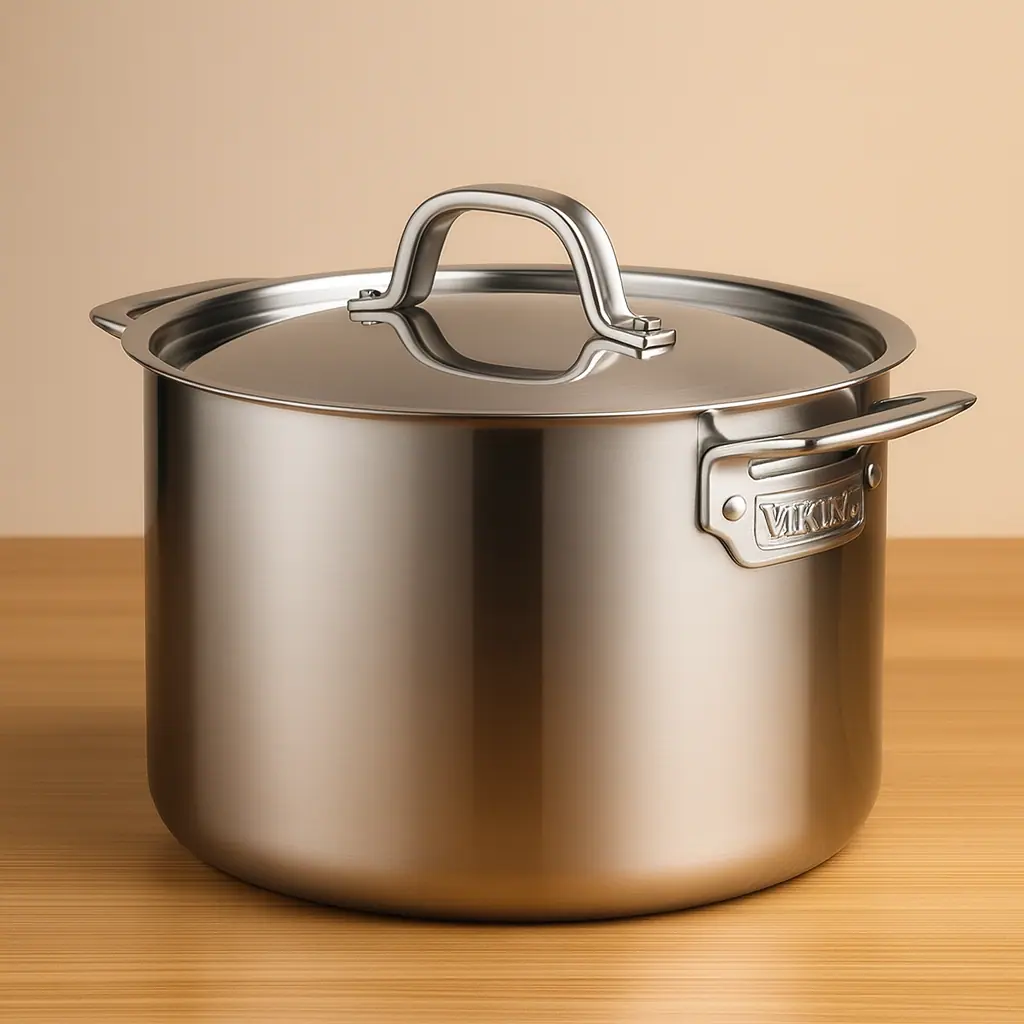
A stainless steel stock pot can change the way you cook for family, guests, and meal prep — and the Viking 3-Ply Stainless Steel Stock Pot, 12 Quart, aims to do exactly that. Right from the first boil this pot shows why serious home cooks choose a well-built stockpot: even heat, tall walls for long simmers, and a build that moves from induction to oven without drama. If you’re asking whether a single new piece of cookware can make weekday dinners and weekend batch-cooking easier, this stainless steel stock pot is worth a close look.
Key Specs at a Glance:
| Feature | Specification |
|---|---|
| Brand | Viking |
| Material | 304 Stainless Steel (3-Ply) |
| Capacity | 12 Quarts (approx. 12 Liters) |
| Dimensions | 11″D x 13″W x 9″H |
| Compatibility | All Cooktops (Including Induction) |
| Oven Safe | Up to 600°F (315°C) |
| Lid | Yes, Tight-Fitting Stainless Steel |
| Handles | Riveted, Ergonomic |
What makes this stainless steel stock pot different — quick snapshot
- True 3-ply construction: a 304 stainless interior, aluminum core, and magnetic stainless exterior for even heat and induction compatibility.
- 12-quart capacity: roomy for large-batch soups, stocks, pasta, and canning.
- Oven safe to 600°F (315°C) and dishwasher friendly.
- Riveted ergonomic handles and mirror finish for a professional look and sturdy handling.
These design choices make the pot perform like higher-end cookware while staying in a mid-range price bracket. If you’ve searched whether is viking stainless steel cookware good, this model is a clear example of the brand’s 3-ply lines that aim to balance value and performance.
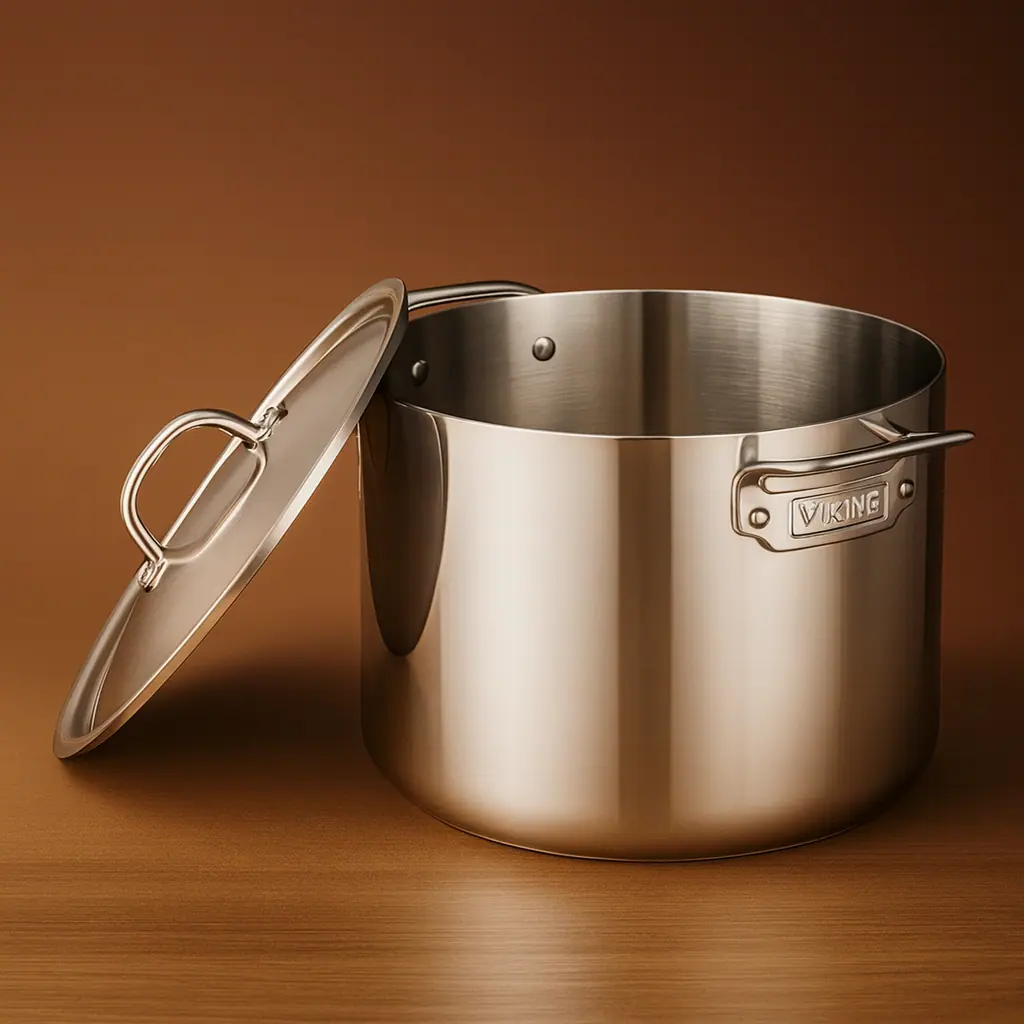
what the stainless steel stock pot is made of (materials explained)
Think of this section as the recipe for how the pot works:
- Interior: 304 stainless steel — non-reactive, safe for tomatoes and acids, and easy to maintain.
- Core: Aluminum layer — the thermal workhorse that spreads heat fast and evenly across the base and up the sides.
- Exterior: Magnetic stainless steel — makes the pot induction ready and sturdy.
- Riveted stainless handles — provide secure, balanced lifting even with heavy contents.
- Lid: Tight-fitting stainless lid — helps reduce evaporation during long simmers.
These materials are exactly the same elements you’d look for in modern stainless steel cookware pan sets. The combined layers — often called tri ply stainless cookware or 3-ply bonded construction — are what create consistent heating and reduce hotspots.
How the Viking 3-Ply Stainless Steel Stock Pot performs in everyday cooking
I tested the pot across three typical tasks to assess real-world performance:
- Pasta and boiling — Filled to about 3/4 for two boxes of pasta. The pot brought water to a rolling boil faster than comparably thin stainless pans and held a boil steady without violent bubbling or boil-over.
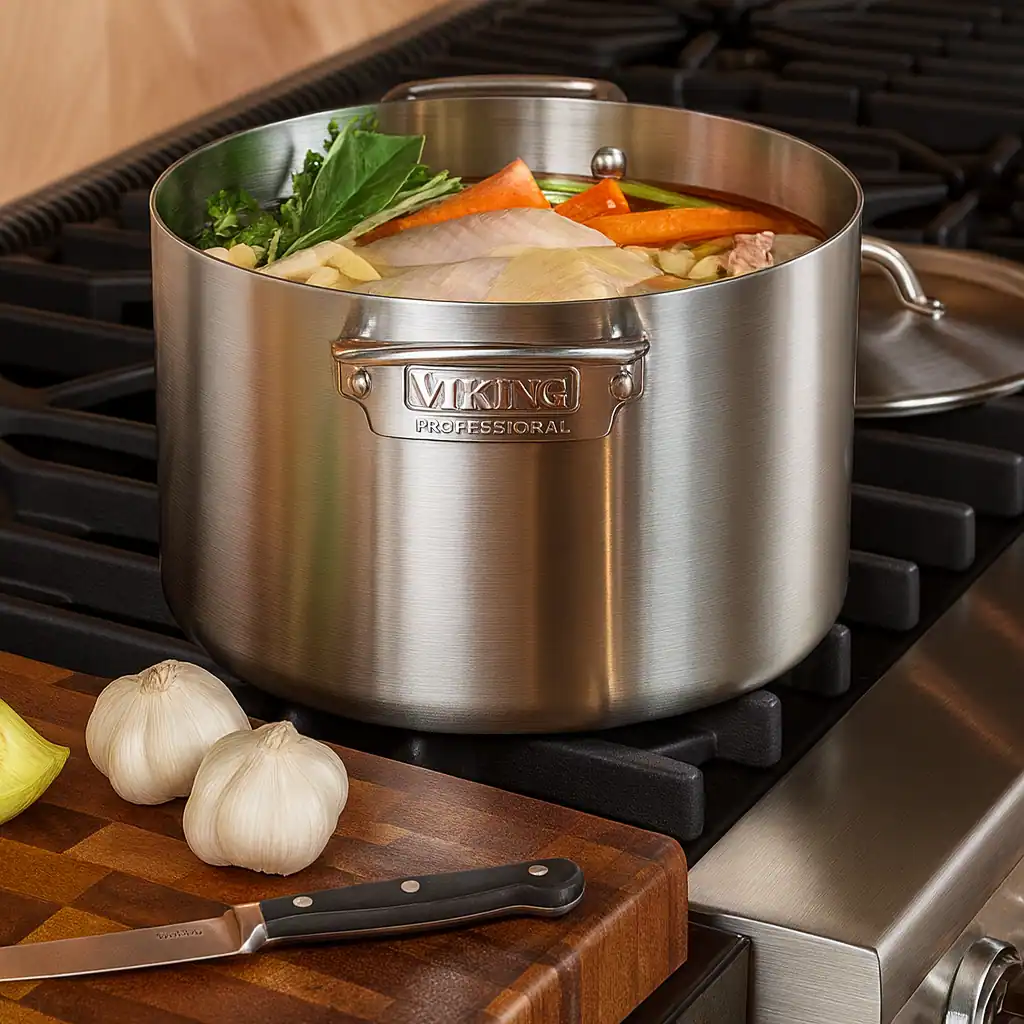
- Long bone broth simmer — Low, slow heat for 8+ hours. The tall sides reduced evaporation, and the heat distribution prevented localized scorching near the bottom.
- Sear then oven finish — Sautéed aromatics and browned meat, then finished in a 400°F oven to reduce and thicken the sauce. No warping, and the handles stayed solid.
Practical note: Because of the weight of a full 12-quart pot, always use both hands and consider a second person for moving heavy hot liquids. This is a trade-off for capacity and build quality.
How big of a stockpot do i need? (simple guide)
- For 1–2 people: a 4–6 quart pot usually covers everyday needs.
- For small families (2–4): 6–8 quarts handles soups and one-pot dinners nicely.
- For regular batch-cooking, canning, or feeding a crowd: 10–16 quarts is ideal — that’s where a 12-quart Viking stock pot shines.
If you freeze portions, host potluck dinners, or make bone broth regularly, 12 quarts gives you room without being over-giant. For most home cooks who meal-prep weekly, 12 quarts balances capacity with stovetop footprint.

Benefits — what you actually gain
- Even heating for consistent results: The aluminum core in the 3-ply design reduces hotspots, so sauces and stocks cook evenly.
- Versatility across cooktops: Works on gas, electric, ceramic, and induction because of the magnetic stainless exterior.
- Oven-ready: Finish braises or reduce sauces in the oven up to 600°F.
- Large capacity: Good for meal prep, parties, and canning.
- Durable and dishwasher friendly: The mirror finish looks great and cleans up easily, though gentle handwashing extends the life of the finish.
Quick takeaway: This pot gives you professional-feeling performance without the need for commercial equipment.
Pros and cons (so you can decide quickly)
Pros
- Strong, even heating from true 3-ply construction.
- Large, useful 12-quart capacity.
- Induction ready and oven safe to high temperatures.
- Comfortable, riveted handles for safe lifting.
- Dishwasher safe for convenience.
Cons
- Heavy when filled — expect to use two hands or a helper.
- No nonstick surface — stainless requires technique to prevent sticking.
- Mirror finish can show water spots if not dried promptly.
Bottom line: The pros outweigh the cons for cooks who prioritize heat performance and durability.
Table: Quick spec comparison
Care and maintenance — keep it looking new
- Preheat correctly: Warm the empty pot on medium for a minute, then add oil or liquid before increasing heat. This reduces sticking.
- Cleaning: Use warm, soapy water for regular washes. For stuck-on bits, simmer water with a little baking soda to loosen residue. Avoid harsh steel wool on the mirror finish.
- Dishwasher tip: While dishwasher safe, hand washing preserves shine longer. Dry promptly to prevent water spots.
- Storage: If stacking multiple pots, place a soft divider to avoid scratches.
Follow these steps and the pot will stay functional and attractive for years.
Real recipes to try with your 12-quart Stainless Steel Stock Pot
- Weeknight one-pot pasta for a crowd — Sear aromatics, add pasta and broth, bring to simmer, and finish with cheese and herbs. The even heat prevents sticking and keeps the pasta tender.
- Roasted vegetable broth — Roast scraps, then simmer in the stock pot for a deep-flavored base for soups.
- Big-batch chili or stew — Brown meat, add beans and spices, and simmer until flavors meld. The high walls and even heat make reduction predictable.
These recipes show how a well-built pot shifts kitchen confidence: larger batches, better control, and less babysitting.
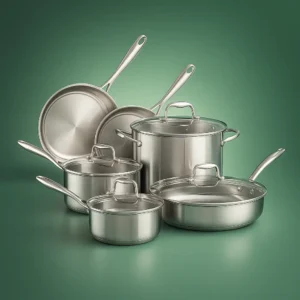
Finding Your Forever Kitchenware: A Real-World Guide to the Best Pots and Pans in the United States
Navigating the aisles—both physical and digital—for kitchen cookware can feel overwhelming. With countless brands, materials, and price points, how do you possibly choose? The search for the best pots and pans in the United States isn’t about finding a single, magic set. It’s about building a curated collection that works for your cooking style, your stove, and your budget. The goal isn’t to fill your cabinets, but to equip your kitchen with versatile, durable pieces you’ll reach for every day.
The true foundation of any well-equipped American kitchen is a set of the best pots and pans that balance professional performance with everyday practicality. This means moving beyond non-stick fads and flimsy sets, and instead investing in pieces that offer superior heat control, effortless cleanup, and longevity. It’s about understanding that the right tools don’t just make cooking easier; they make your food taste better. Whether you’re searing a steak, simmering a delicate sauce, or boiling pasta for a family, the quality of your cookware is the silent partner in your culinary success.
So, what truly defines the best pots and pans for a home cook today? We can break it down into three core principles:
1. The Material Matters Most: Beyond the Shiny Surface
The metal your cookware is made from dictates everything. The current gold standard for home cooks seeking the best pots and pans is multi-ply construction, often called “clad.” This typically involves an aluminum or copper core sandwiched between layers of stainless steel. Why does this win?
- Stainless Steel: Provides a non-reactive, durable cooking surface. You can cook acidic tomatoes or wine-based sauces without a metallic taste.
- Aluminum Core: This is the heat superhighway. It spreads warmth quickly and evenly across the entire surface, eliminating hot spots that burn food.
- Magnetic Layer: Makes the cookware compatible with induction cooktops, the fastest-growing stove type in the U.S.
2. The Essential Lineup: Quality Over Quantity
You don’t need a 15-piece set. Most home cooks can prepare 90% of their meals with just four key pieces:
- A 10-12 inch Skillet: Your go-to for searing, sautéing, and frying.
- A 3-4 Quart Saucepan: Perfect for sauces, grains, and reheating.
- A 6-8 Quart Stockpot: Ideal for soups, stews, pasta, and boiling corn.
- A Dutch Oven: A heavy, enameled cast-iron pot is a powerhouse for braising, baking bread, and deep frying.
Comparing Core Cookware Types
| Type | Best For | Considerations |
|---|---|---|
| Tri-Ply Stainless Steel | Versatility, searing, deglazing, durability, all stovetops. | Requires fat for cooking, has a learning curve. |
| Cast Iron | Unbeatable heat retention, perfect for searing. | Very heavy, requires seasoning to maintain. |
| Enameled Cast Iron | Same as cast iron, but non-reactive and easy to clean. | Can be expensive and is prone to chipping if mishandled. |
| Non-Stick | Eggs, delicate fish, pancakes, quick clean-up. | Not for high-heat searing, coating wears out over time. |
3. The American Kitchen is Diverse: Your Stove Dictates Your Choice
The best pots and pans for a gas stove user might be different from what an induction cooktop owner needs. Always check compatibility. Furthermore, consider your lifestyle. A busy parent might prioritize dishwasher-safe stainless steel, while a dedicated home chef might cherish the ritual of caring for carbon steel.
Ultimately, identifying the best pots and pans is a personal journey. It’s about investing in pieces that feel good in your hand, perform reliably on your stove, and inspire you to cook more often. By focusing on material, construction, and the essential pieces, you can cut through the marketing noise and build a kitchen arsenal that will serve you for a lifetime.
Frequently asked practical questions
Q: Will this pot handle induction cooktops?
Yes — the magnetic stainless exterior makes it induction ready.
Q: Can acidic foods be cooked in this pot?
Yes — the 304 stainless interior is non-reactive, safe for tomatoes, wine, and vinegar-based recipes.
Q: Is Viking 3-ply bonded cookware worth it?
If you want more even heating and induction compatibility than basic stainless, tri ply or 3-ply bonded cookware is a good step up. This pot demonstrates that construction well.
Q: How heavy is a filled 12-quart pot?
A full 12 quarts of liquid is heavy; expect to need two hands to move it safely. Consider transferring in batches if you’re working alone.
Comparison note – stainless steel cookware pan vs this Stainless Steel Stock Pot
A typical stainless steel cookware pan (like frying pans and saucepans) is great for sauté, searing, and smaller tasks. A stainless steel stock pot is designed for volume and slow cooking. Together they form a functional set: the pan for quick high-heat tasks, the stock pot for long simmers and big batches.
Personal take (from the kitchen)
I keep a few pots in regular rotation: a heavy skillet, a sauté pan, and a roomy stock pot. The Viking 12-quart slotting into the last role has been practical — it’s the pot I choose for family Sunday soups and any time I’m making stock for the freezer. While it’s not feather-light, the build quality and heat responsiveness make it one of the more reliable stainless pieces in my kitchen.
Who should buy this stainless steel stock pot?
- Home cooks who batch-cook, preserve, or make broths often.
- People with induction cooktops who want a versatile oven-ready pot.
- Anyone upgrading from thin, single-layer pots to tri ply stainless cookware and wanting a mid-range, sturdy option.
If those points sound like you, this pot is a useful, long-term tool.
Final notes and quick care checklist
Bold points to remember:
- True 3-ply construction delivers even heat.
- 12-quart capacity is ideal for batch-cooking and canning.
- Induction and oven friendly up to 600°F.
- Use both hands for heavy fills and avoid abrasive cleaners.
If you’re wondering how big of a stockpot do i need and your answer includes family meals, guests, or frequent broth-making, this 12-quart option is a practical choice. It’s a reliable stainless steel stock pot that combines performance, versatility, and a design meant to last.
While each product featured is independently selected by our editors, we may include paid promotion. This post contains Amazon affiliate links. If you buy something through our links, we may earn commission. thank you! For more information, see our terms of service.